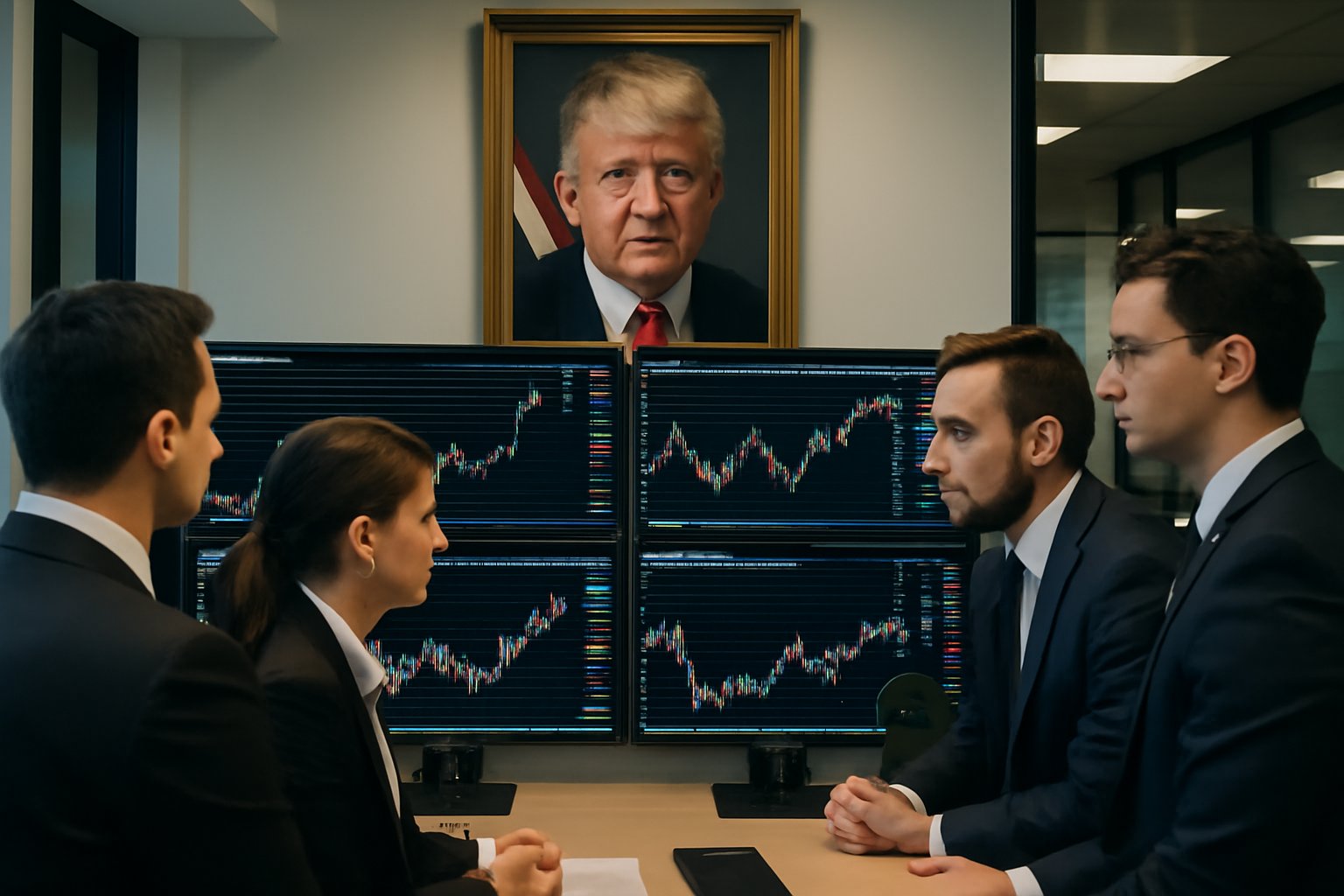
U.S. stock markets show resilience amid geopolitical tensions and former President Trump's "Donroe Doctrine," emphasizing military spending and global influence, boosting defense stocks despite risks.
US tariffs on imports are increasing costs for consumers and businesses, leading to industry adaptations and price hikes on goods like furniture, electronics, and food.
Former South Korean President Yoon Suk Yeol receives a life sentence for insurrection after declaring martial law in 2024, a monumental ruling highlighting democratic challenges.
DHS plans to overhaul its immigration detention system by reducing facilities from 200 to 34 centralized warehouses, sparking significant community pushback and economic concerns.
The RBNZ holds interest rates steady at 2.25% amidst rising inflation and economic uncertainty, under new Governor Anna Breman's leadership, balancing inflation control with fragile economic recovery.
Federal Reserve officials deliver mixed signals on interest rate policy amid inflation concerns and labor market changes, impacting Treasury yields and corporate bond markets' expectations.
Gold prices stabilize around $4,975 amid Lunar New Year trading and anticipation of Federal Reserve rate decisions, with investors eyeing economic data and global uncertainties.
Companies ramp up currency hedging strategies in response to steep U.S. dollar drops and tariff-induced losses, facing multimillion-dollar financial impacts, a JPMorgan report reveals.
UK's economic shift with declining inflation and rising unemployment sparks speculation of Bank of England interest rate cuts, amid mixed market reactions and upcoming policy decisions.
Investor confidence in South African bonds surges as demand at auctions reaches record levels, driven by optimism about upcoming fiscal reforms and improved credit ratings.
The US dollar rises against the yen as traders foresee fewer Federal Reserve rate cuts, impacting currency evaluations and investment strategies amid Japan's fiscal concerns.
NYC Mayor Zohran Mamdani proposes a 9.5% property tax hike to address a $12.6 billion deficit, stirring controversy amid an affordability crisis.